
Junglepixiebelize - Recollections of a Gringa Pioneer
Nancy R Koerner - Copyright@2021 - All Rights Reserved
CHAPTER THIRTY-THREE
"Belizean Amazon"
The journey south was long. Incredibly long. Considering it was only about 72 miles from Belmopan to Punta Gorda “as a crow flies,” I was constantly reminded that I was not a crow. With all the doglegs and curves on the Hummingbird, added to twists and turns on the Southern Highway, the actual distance by road would be closer to 180 miles.
We had spent the night in Dangriga, and were now headed back west on the spur of road that connected back to the Southern Highway. There had been a few scattered houses in the low country, but after turning south at the junction, there seemed to be no human habitation whatsoever. More and more, the bush seemed to grow taller, and we began to cross a number of bridges that drained from the valleys of the Cockscomb Range to the sea. The bridges were low-profile, lacking the steel superstructure that usually gives bridges their character and charm. These bridges were as plainly-adorned as a Mennonite—simple expanses of concrete decking, connecting one side to the other. No superstructure, no guardrails.
Our now-upgraded Belize map, dated 1975, showed Hopkins and Freetown as tiny fishing villages to the east. But these were on the coast, situated at the mouths of the brown rushing rivers we were now crossing. No spurs of roadway connected them to the Southern Highway. (Wait…“brown rivers?”) In Cayo, rivers were green and clear. Apparently, these rivers were already in flood, and it was to be a critical error on our part. In Cayo, annual rainfall was 75-85 inches per year. But we’d seen none of it—as we had yet to experience our first rainy season. We did not know that Toledo District received a whopping 160-175 inches of rainfall per year.
In 1711, the English poet, Alexander Pope, wrote "Fools rush in where angels fear to tread." And, in retrospect, what we fools did not know would almost kill us.
As we continued south, real fear began to dominate my mind. There was nothing. It was an untamed and unbroken wilderness. We would need access to fuel, food, water, and shelter. What would we do in case of medical emergency, or car accident? Where would we find a mechanic, or a tow truck? There were no villages, not even the occasional tiny thatched house, let alone a gas station, or a place to buy something to eat. Even if there were a village, there would be no phone. And, realistically, we had no idea where we actually were. It was a land utterly devoid of measurements. No signage. No mile markers. We had no idea how far we had travelled, and no indication of distance to the next destination. That was the scariest part. How close? How far? And how long would it take?
Our map showed Independence Village, the only place between Dangriga and Punta Gorda that might contain anything to prolong our survival. So, we took a guess on what turned out to be a lucky left-turn. It was a life-saver, our temporary salvation. No thriving metropolis, to be sure, but at least we were able to get fuel, eat a good meal, and stock up on water, polvorón, pepitas, and PK gum. We parked on a level spot, and my husband took out his tools, spread a crocus bag to sit on, and checked the bearings and tie-rod ends. I didn’t even give utterance to the most terrifying question: what if we broke down on the road? And we didn’t dare to stay long in Independence. We had to make PG by dark to find food and lodging.
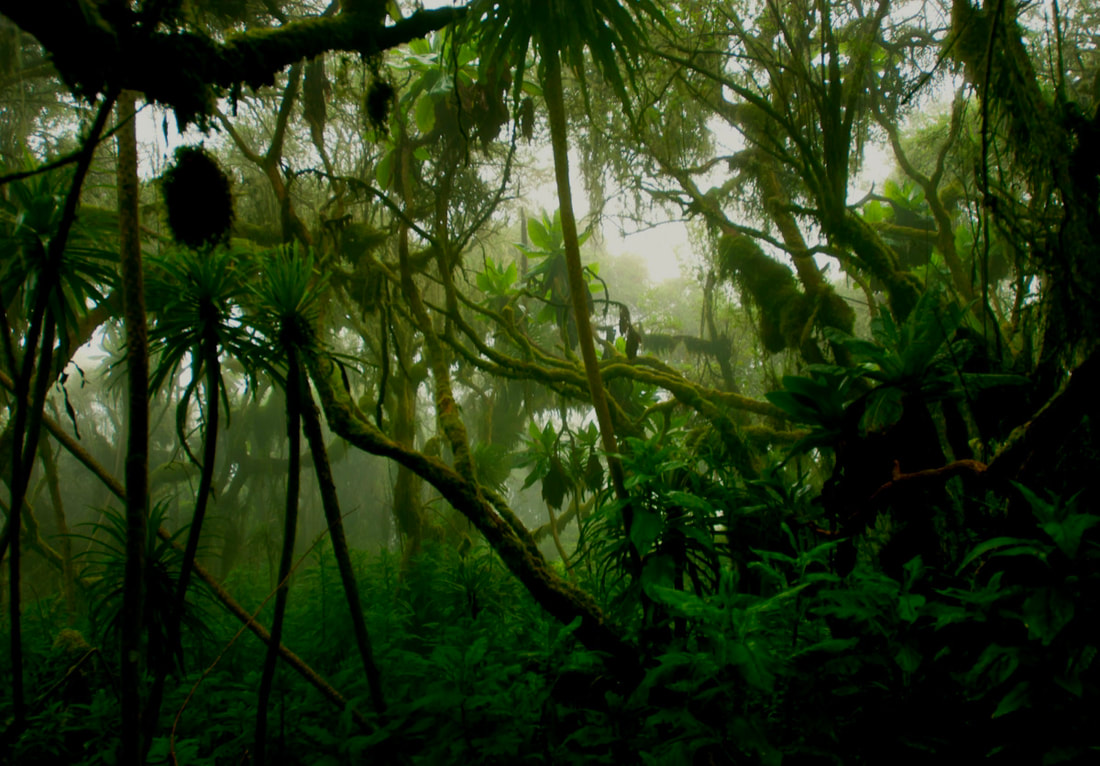
My literary talent now fails me in describing the next stretch of the journey, a wilderness beyond anything I could ever have imagined. The jungle thickened and grew until it towered over us, consuming us with the intensity of some monstrous hungry creature. Belize had held this otherworldly secret, and now we plunged directly into its emerald maw. It was Amazonian, ancient, and Jurassic, a true triple-canopy rainforest, so humid it was veiled in mist, the sunlight barely able to penetrate the forest primeval. The trees were so huge as to seem prehistoric, as though they had shot forth from the primordial ooze at the dawn of time. Giant lianas, as thick as my thigh, festooned in the impossible tangle of dripping jungle foliage. Bird calls echoed hollow tones, monkeys hooted, beetles sang at a mind-numbing timbre and volume. It was not difficult to imagine the near-invisible outline of a T-Rex, standing motionless and waiting to pounce. It was in an antediluvian place, a place where humans simply did not belong.*
Again, as with the old Ford step-van, the Toyota had no air-conditioning, and it couldn’t move fast enough to channel any air inside. We were sweating bullets. Mosquitoes swarmed. My baby son cried with bug bites and heat rash. I was constantly wiping him down with a clean cotton diaper moistened with water. This innocent ambition to check out Toledo District before deciding on Cayo, had transformed into something quite different. Our little family was now in full survival mode. Life’s focus had narrowed down to three simple elements: the skinny brown wallow of rutted track ahead, tightly bordered by the looming jungle on either side, and our tired old Franken-cruiser, with its mismatched panels of green and white, clap-banging its way through the mud.
Minutes later, we stopped at the edge of a raging river that appeared to have no bridge. It had either been covered by floodwaters, or had been washed away. We couldn’t tell which…
My mind raced in desperation. Could be worse, I thought. Could be raining.
And then, it started to rain…
(To be continued…)
My mind raced in desperation. Could be worse, I thought. Could be raining.
And then, it started to rain…
(To be continued…)
********************
*You will not find this place in modern-day Belize. I returned to the area in 2015, and it was gone. Through the years, it had suffered from non-sustainable logging practices and encroaching agriculture. Then, in 2001, Hurricane Iris, a powerful Category Four, with a tiny eye of only 7 miles in diameter, and peak winds of 145 MPH—leveled what remained of this part of the vast southern forest. Sadly, it exists now only in my memory, and in these words I write…
*You will not find this place in modern-day Belize. I returned to the area in 2015, and it was gone. Through the years, it had suffered from non-sustainable logging practices and encroaching agriculture. Then, in 2001, Hurricane Iris, a powerful Category Four, with a tiny eye of only 7 miles in diameter, and peak winds of 145 MPH—leveled what remained of this part of the vast southern forest. Sadly, it exists now only in my memory, and in these words I write…